


How Melbourne’s Cable Trams Moved (1885)
How Melbourne’s Cable Trams Moved (1885)
Melbourne’s cable trams carried no motor of their own. A grip beneath the leading car took hold of a moving cable under the street.
The story behind the scene
The cable system began operating in 1885. Engine houses drove cables through channels beneath the road, with pulleys keeping the ropes moving along each route.
A gripman controlled the connection between the car and cable through a narrow slot between the rails. Taking hold pulled the tram forward; releasing the grip removed that pull.
This equipment had to work within a road shared with other traffic. Melbourne later replaced the cable routes with electric trams and buses, and the final cable service ran in 1940.
What you’re seeing
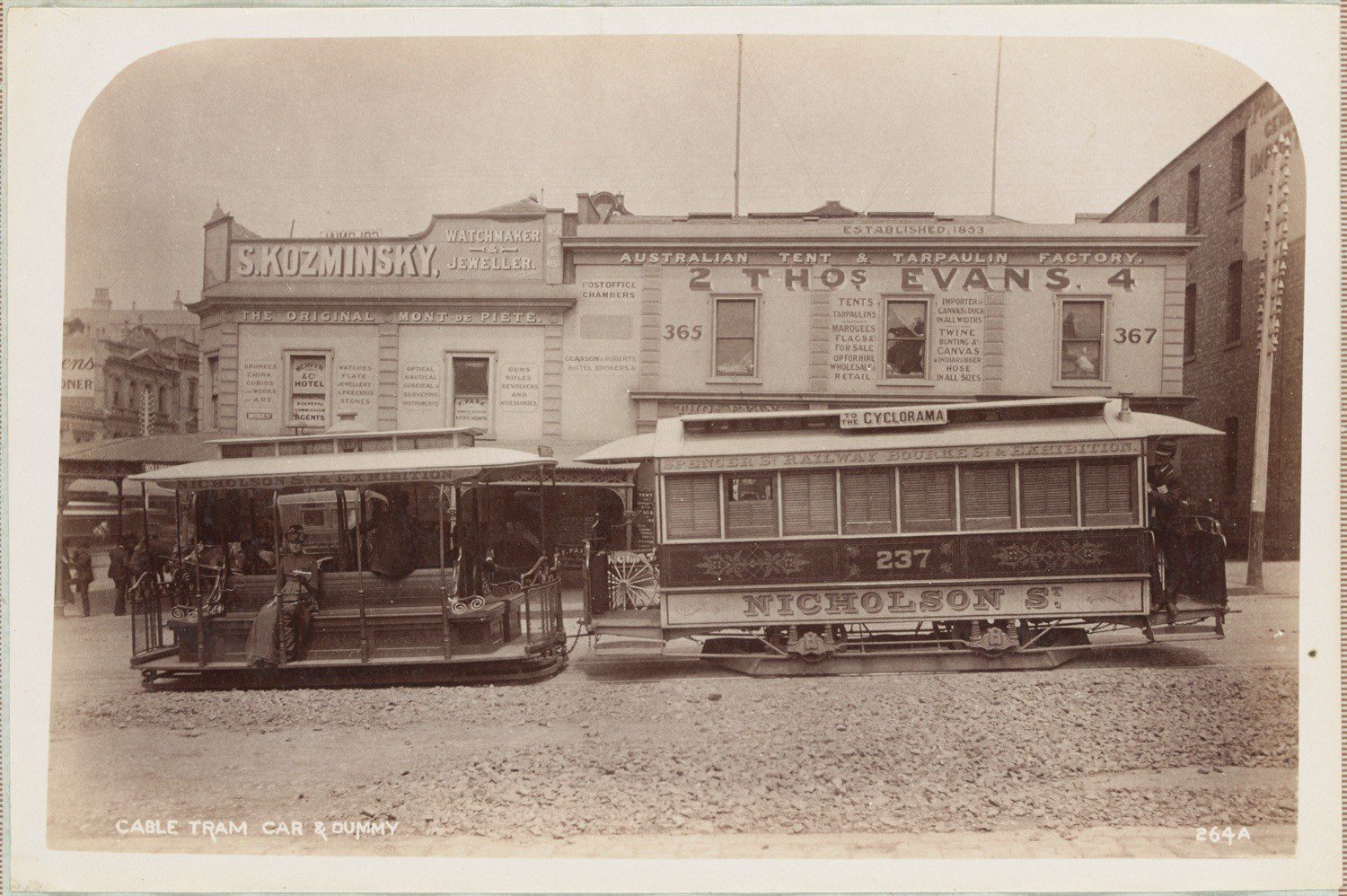
Charles Rudd’s photograph shows a cable tram and trailer in Bourke Street. The small, open grip car led the enclosed passenger trailer. The power source was elsewhere, which explains the absence of an overhead electric wire.
Why this photo matters
The photograph shows only the visible end of a much larger system. The leading car depended on engine houses, cables and machinery extending along the street.
Sources: Melbourne Tram Museum: Kernot’s 1888 account; Melbourne Cable and Electric Tramways; Melbourne Cable Tramways.