


Crucial for communication between the growing colony and the outside world, the GPO adapted to changing times and is still thriving 160 years later.
From Mail to Retail
The earliest postal services in Melbourne date back to 13 April 1837, soon after settlement. The first permanent post office (built in 1841) was a modest stucco-and-brick building. It underwent timber and iron extensions in the early 1850s before demands quickly outgrew it.
A major design competition was held in 1858 to create a grand new General Post Office. Building began in 1861 and was completed in 1867. As Melbourne boomed during the gold rush era, the GPO became crowded. In 1887, an extra floor, attic level, and a taller, ornate clock tower were added.
From 1913 to 1919, the interior was transformed, turning the sorting hall into a public postal hall with entrances on both major streets. The hall became a meeting spot, a major public gathering place, and a centre for New Year Eve celebrations.
After WWII, mail handling became decentralised and the building’s operational importance declined. By the late 20th century, much of the building was underused.
By the 1990s, Australia Post began streamlining its network, reducing reliance on large historic buildings. The closure of the GPO was first announced in 1993 amid controversy over its future. Postal functions were transferred to a smaller facility nearby.
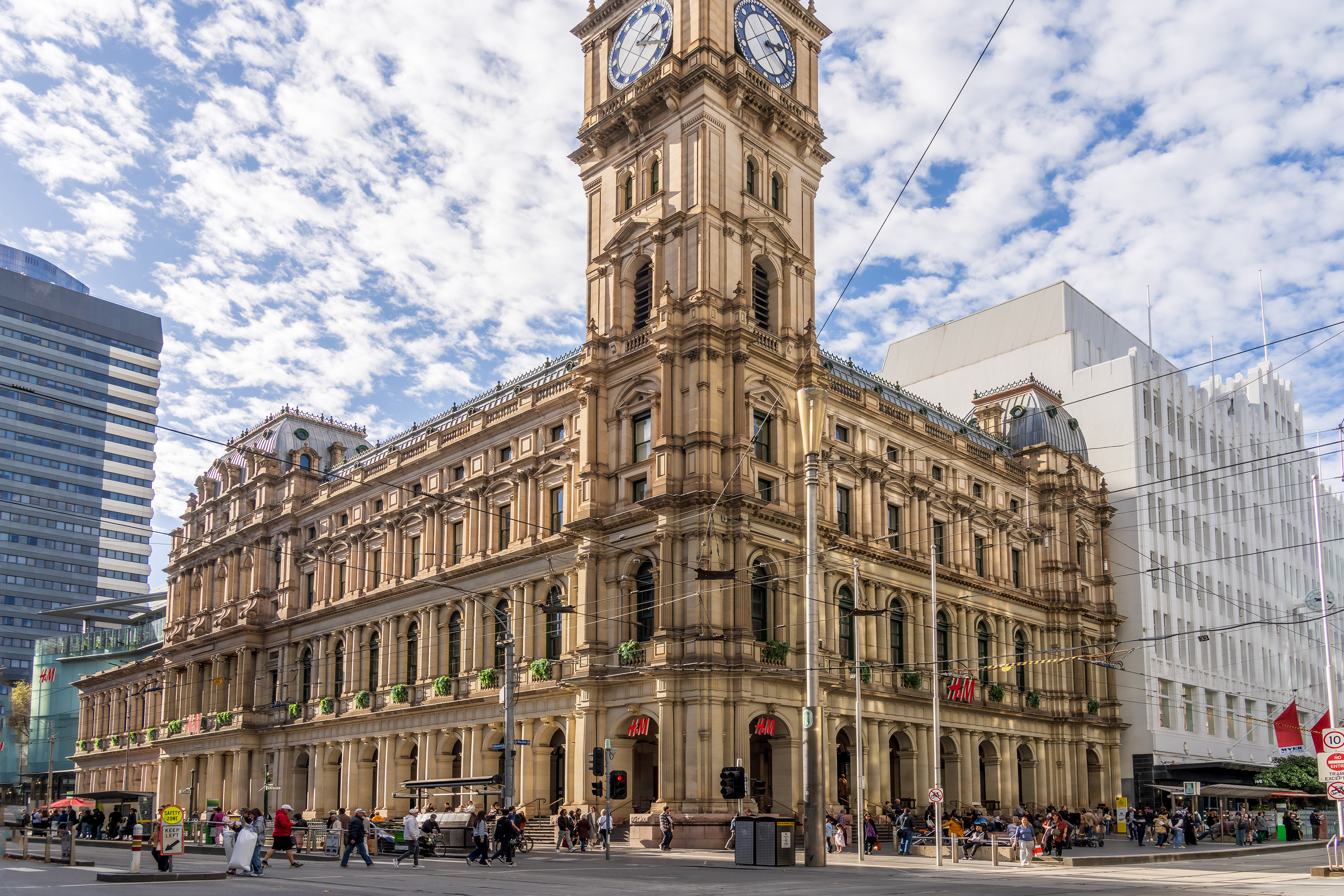
It reopened in late 2004 as a high-end retail precinct. In 2014, the building was relaunched with Australia’s first flagship H&M store, drawing long crowds on opening day. Cafés, offices, and retail now fill the building, while restoration works preserve its façade.
In a notable property deal in early 2026, the GPO was sold for $88 million to private investors, reflecting its ongoing significance as heritage asset and commercial retail space.
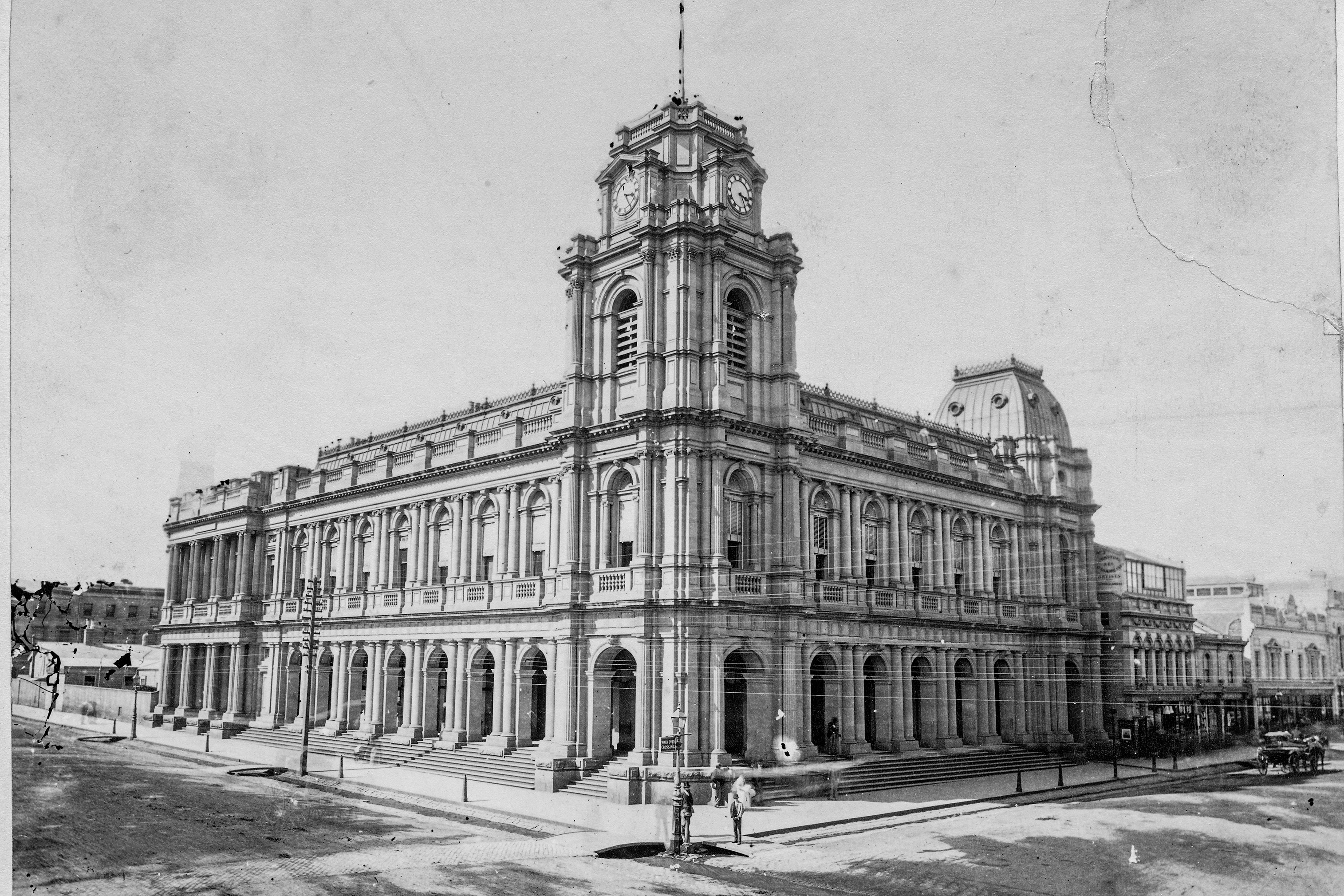
What You’re Seeing in This Photograph
-
The initial façade (1867) was built from Tasmanian sandstone and a bluestone base, embodying the Renaissance Revival style. This is the GPO from the late 1860s to the mid-1880s, when it became too crowded and needed extending.
-
What we don’t see yet are the extensions from 1887, which gave the building much of its distinctive Second French Empire grandeur. Sandstone from the Grampians was used and the clock – manufactured with parts from Glasgow – became a civic landmark, playing one of 28 tunes every 15 minutes. This is the GPO we know today.
Why this photo matters?
- The Melbourne GPO historically served as a nexus for communication in the colony and later the state, reinforcing Melbourne’s position as a major global city. Distances from Melbourne’s centre are still traditionally measured from the GPO.
- Its layered classical orders (Doric, Ionic, and Corinthian) and dramatic clock tower make it a benchmark example of Renaissance Revival architecture with Second Empire details.
- This image captures the GPO at a moment when Melbourne was one of the richest cities in the world, the postal system was the backbone of commerce, governance, and personal life, and architecture was used to signal order, progress, and imperial belonging.
- Beyond its postal function, the GPO became a public gathering spot and enduring part of Melbourne’s civic memory — a testament to 19th-century ambition and 21st-century adaptive reuse.
Explore Melbourne’s Full Visual History
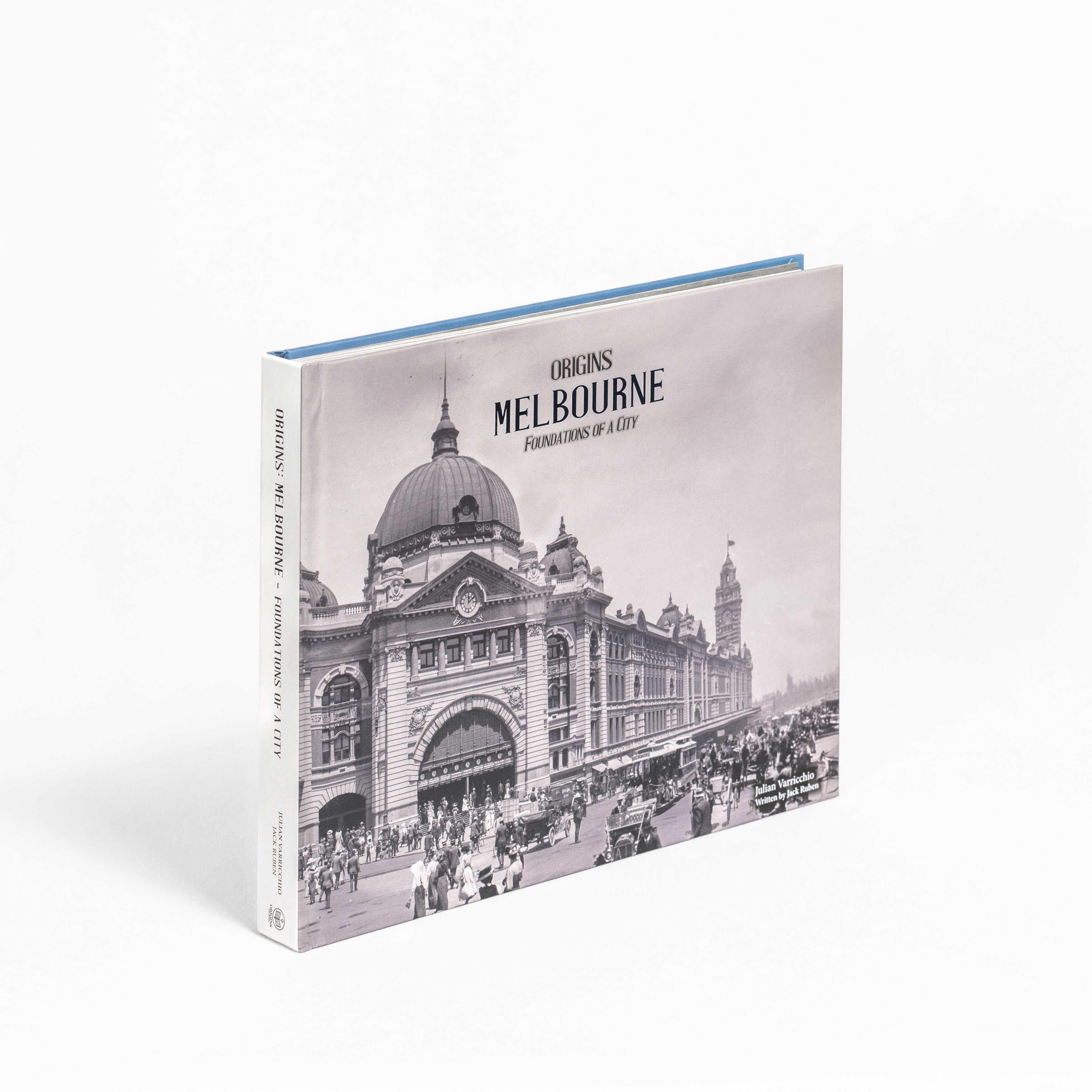
This photograph is just one of hundreds featured in Origins: Melbourne — Foundations of a City, a premium hardcover coffee table book that traces Melbourne’s evolution from the 1800s to today. Restored images, modern re-shoots, and detailed narratives bring the city’s past to life.
Want more like ths?
Head to our History Hub where we break down iconic images and add further context to the scenes and time once gone.