


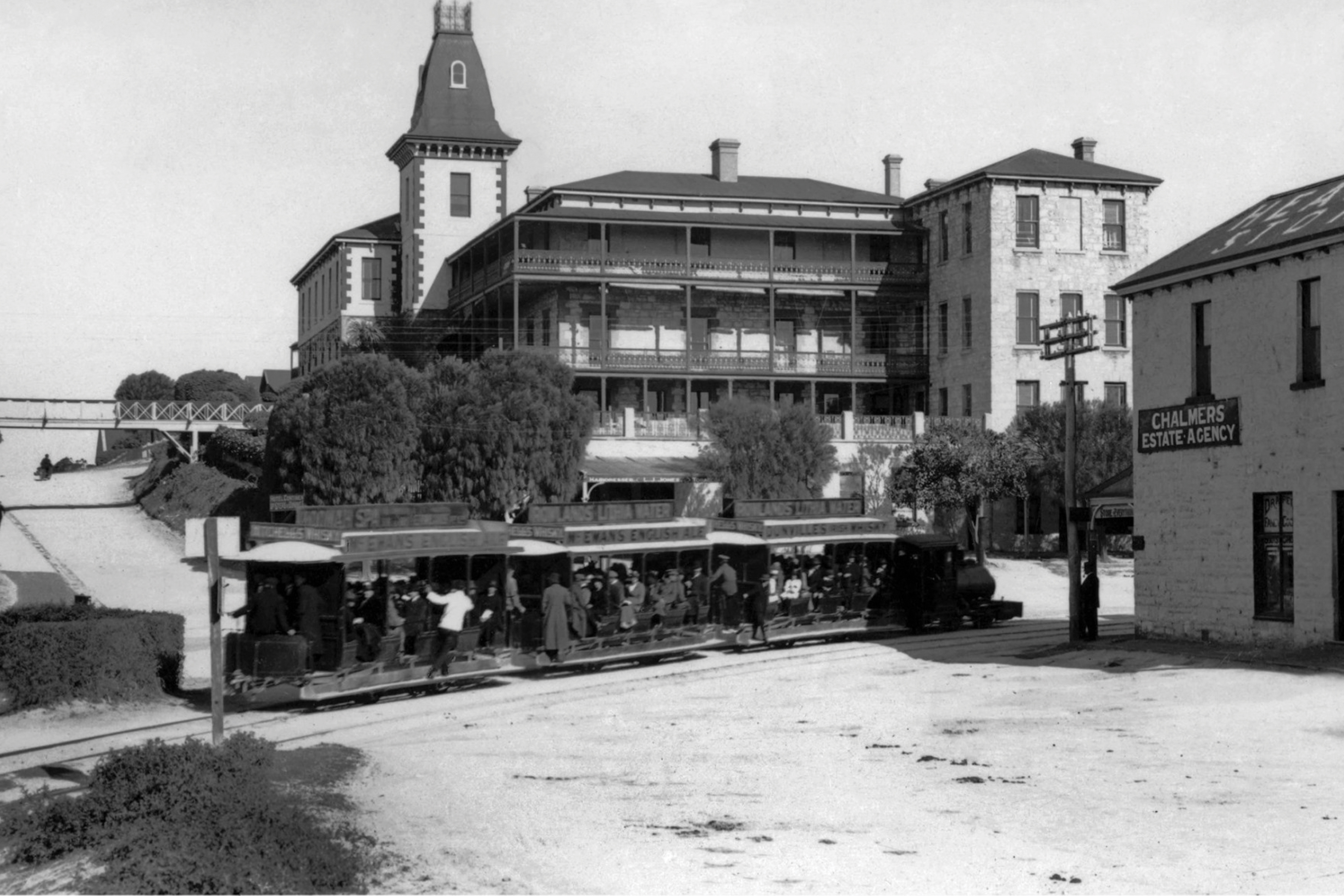
A narrow-gauge track once took passengers from the ferry to the back beach. It was torn up in 1920.
The Man Who Put Sorrento on the Map
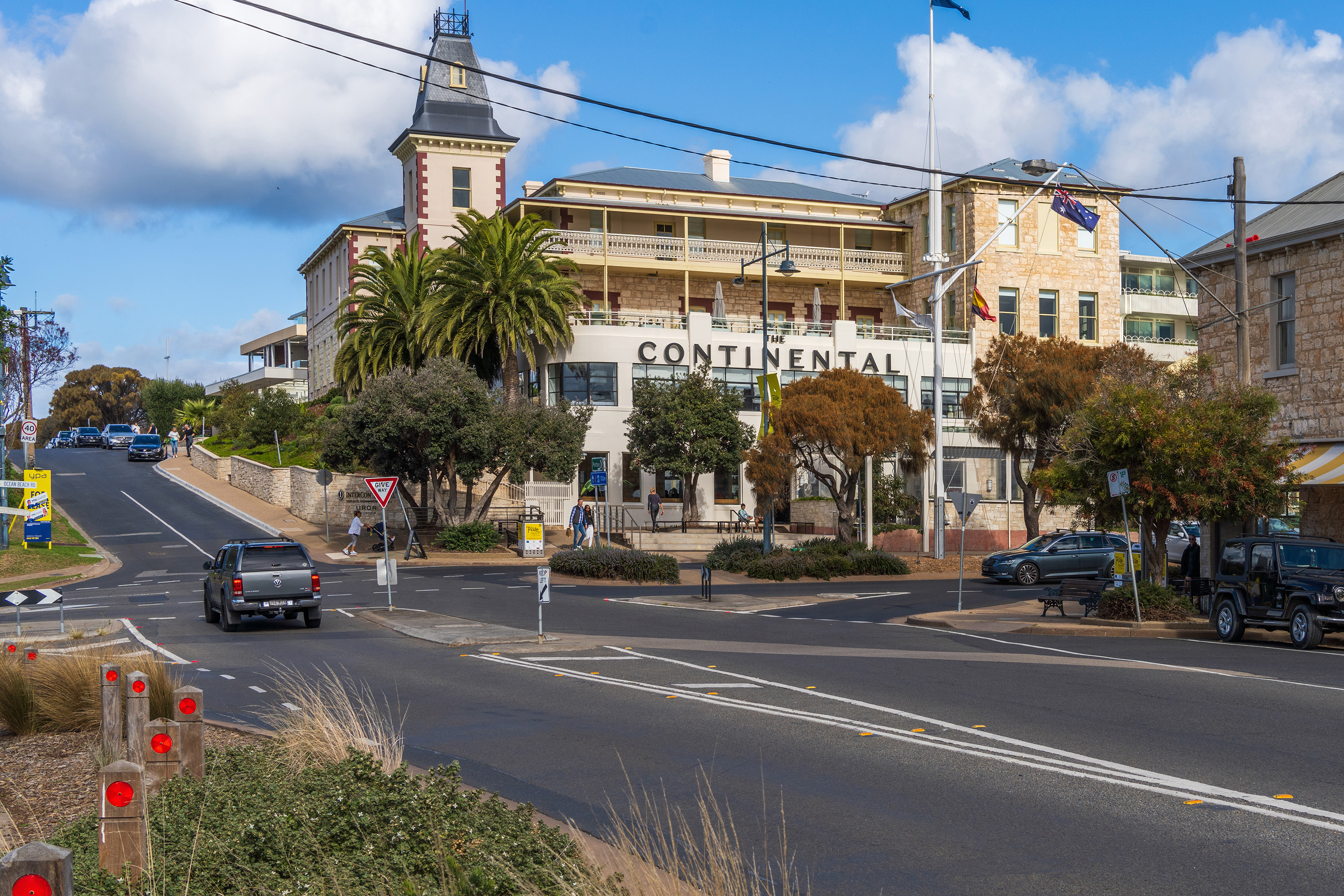
In the late 19th century, the beachside town of Sorrento was becoming a popular Victorian resort, especially for visitors from Melbourne. George Coppin – an actor and entrepreneur – was the driving force behind this transformation. He invested heavily in tourism infrastructure from the 1870s on, building attractions such as the Continental Hotel and promotional steamship services between Melbourne and Sorrento.
With growing visitor numbers arriving by paddle steamer to Sorrento Pier, there was a call for transport to the “back beach” on Bass Strait. To meet the demand, a rail was built to link the pier with the back beach area. By 1890, the steam tram was fully operational.
Even though the tramway was initially hugely popular, by the early 1900s concerns grew about its relevance. With emerging motor transport and residents questioning ongoing investment in a steam tram, some felt the system was outdated compared to buses and cars.
When the original lease expired in March 1920, council denied the company a further renewal. Assets including rails, sleepers, locomotives, and carriages were sold off rather than maintained. Many rails and timber were repurposed, and the locomotives were sent to timber tramways around Noojee.
What You’re Seeing in This Photograph
-
The tramway ran from a platform on the cliff above Sorrento Pier (then called Tramway Hill) southwards along what is now Ocean Beach Road, through the township, and on to the terminus near the back beach: a distance of just over one mile.
-
The service was primarily steam-hauled, with two small Baldwin locomotives pulling up to four open cross-bench trailers. During quieter periods (early morning and evenings), a horse-drawn tramcar provided service instead of steam engines.
-
The footbridge over Constitution Hill Road. When paddle steamers from Melbourne and Queenscliff docked at the Sorrento Pier, passengers did not just walk straight to the tram platform — they used an iron footbridge, which carried them safely over the foreshore area and up the steep cliff face between the pier and the steam tram’s starting point. This made the transition from boat to tram much easier — at a time when carrying luggage and holiday gear up a cliff could otherwise have been difficult.
Why this photo matters?
- Along with the paddle steamers providing transport from Melbourne, the tram was essential in nurturing the growth of Sorrento as a tourist destination in the early years. It allowed for a quick, easy passage between stepping off the boat and stepping foot onto the back beach.
- The tram operated in sync with the tourist season, typically from early November (around Derby Day) until after Easter. There was no formal timetable — trams ran to match steamer arrivals and departures, with engine whistles signalling departures. The tramway carried in excess of 20,000 passengers in a season, with peak volumes even higher.
Explore the Mornington Peninsula’s Full Visual History
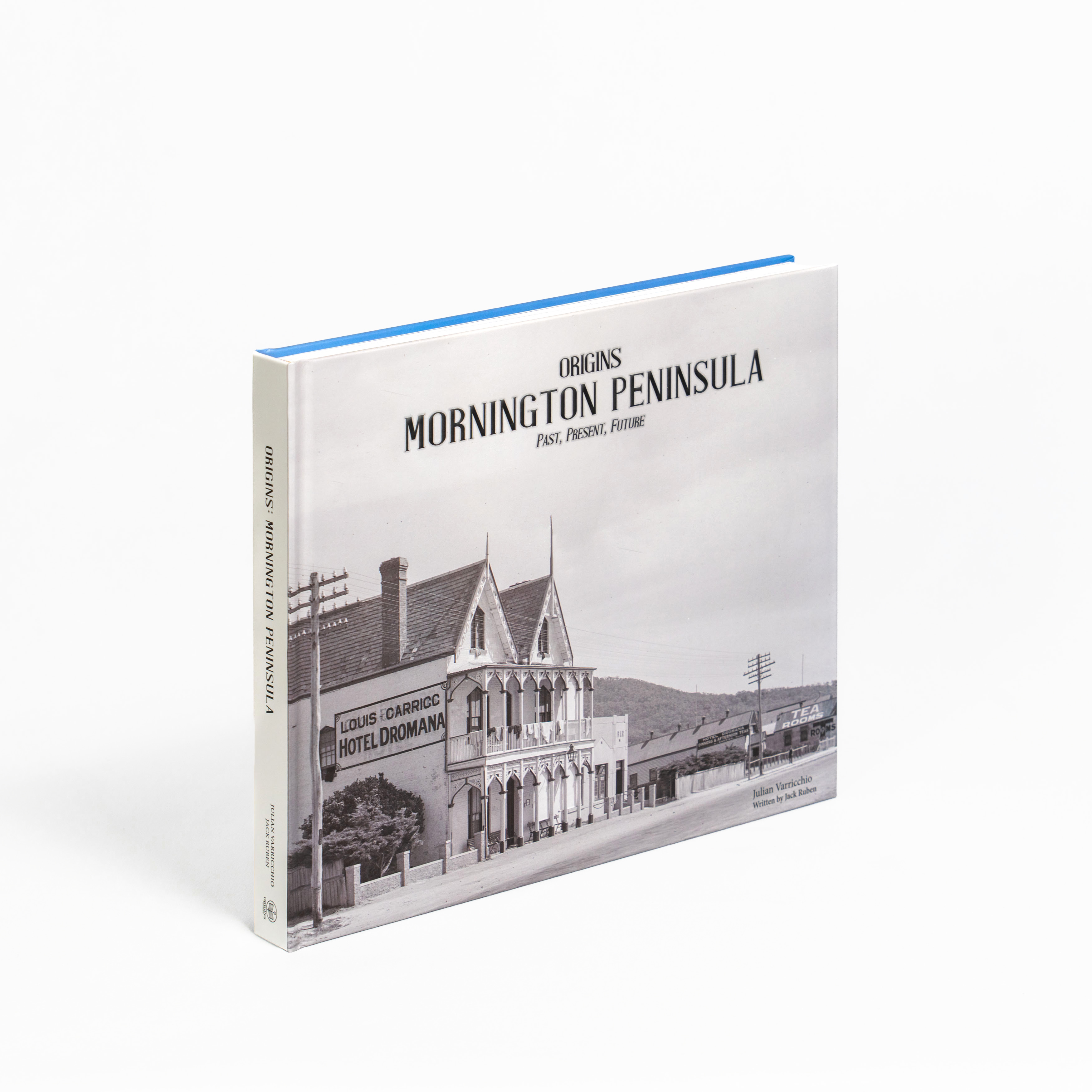
This photograph is just one of hundreds featured in Origins: Mornington Peninsula, a premium hardcover coffee table book that traces the Mornington Peninsula from the 1800s to today. Historical images, modern re-shoots, and detailed narratives bring the regions past to life.
Want more like ths?
Head to our History Hub where we break down iconic images and add further context to the scenes and time once gone.