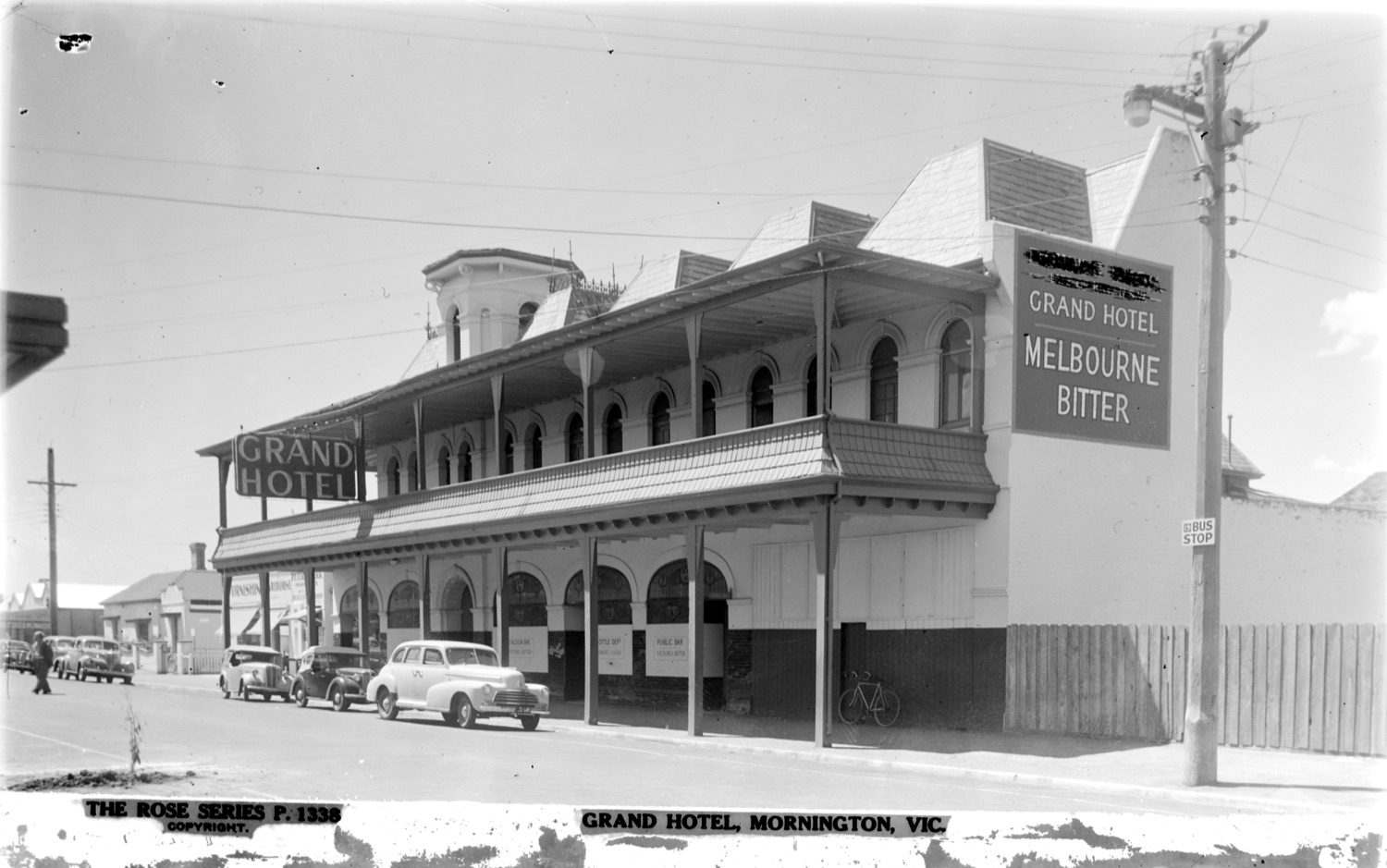
Most Iconic Building on Mornington Main Street (1910s)
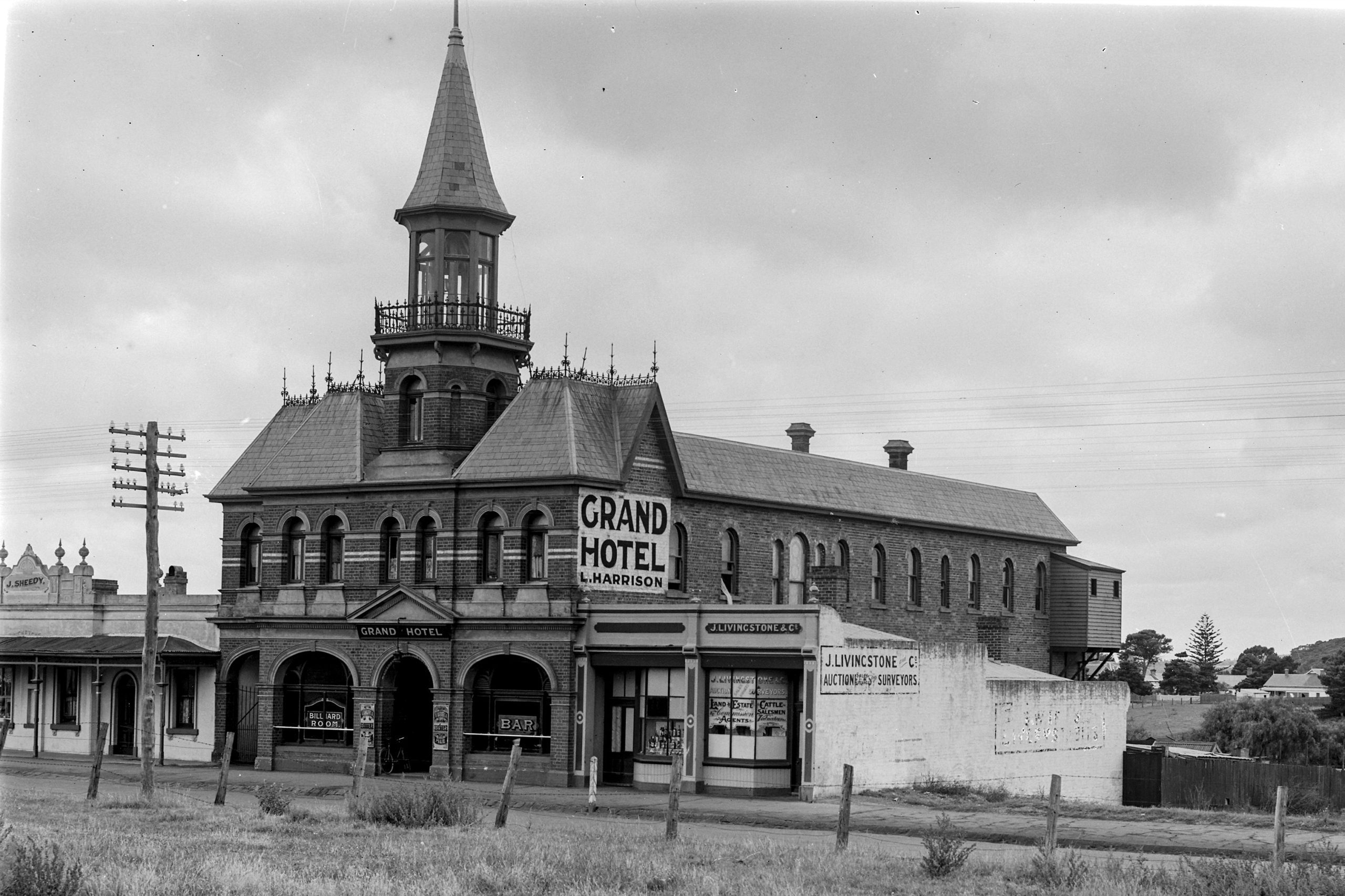
Most Iconic Building on Mornington Main Street (1910s)
The Grand Hotel started life as a pub with no beer. Within a few years, it was licensed and has remained the bar to beat ever since.
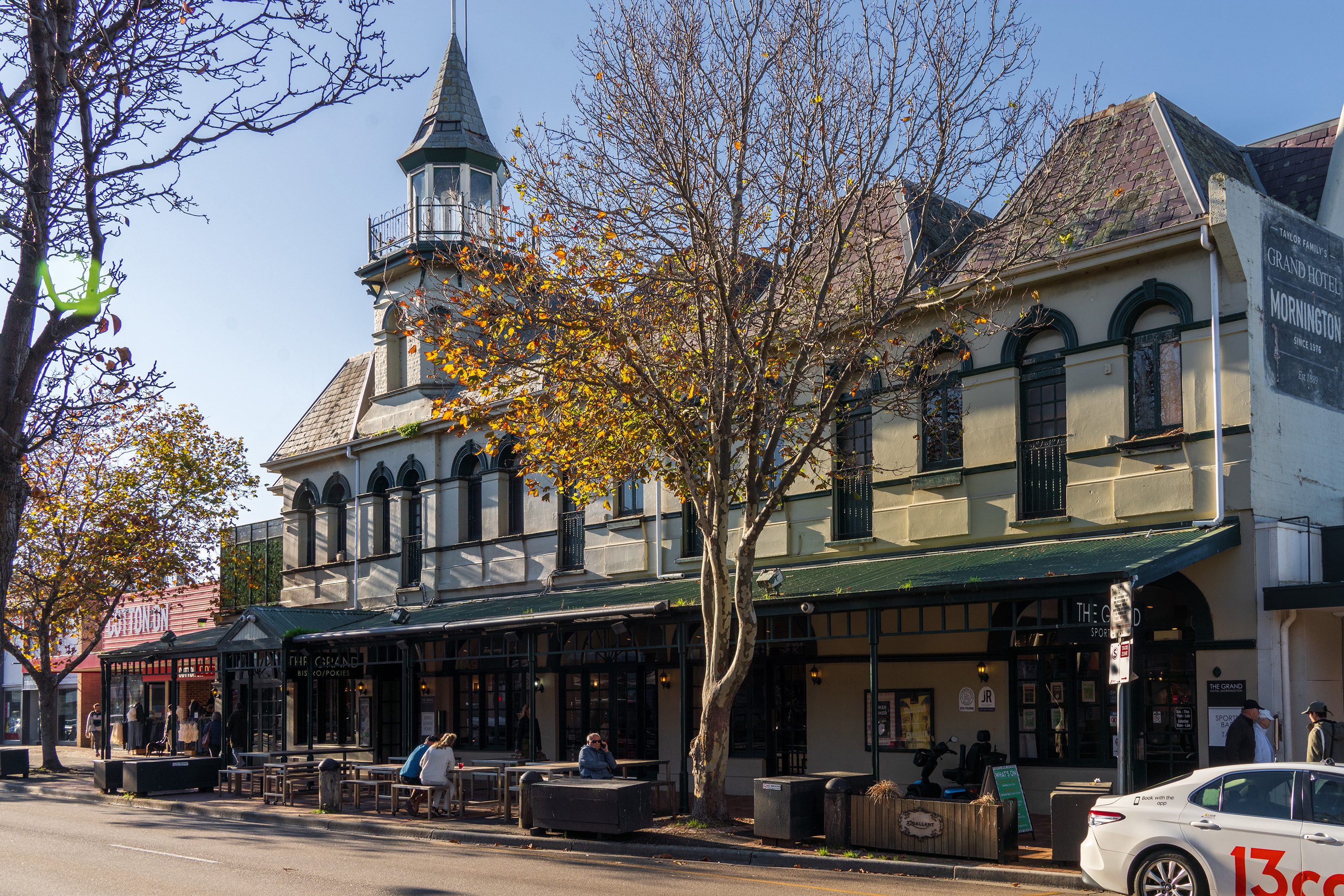
See More Lost Melbourne History
Mornington’s Main Watering Hole, 136 Years in the Making
The Grand Hotel was built in 1889 – back then, Mornington was still a growing township and not the bustling hub it is today. It was originally constructed as the Grand Coffee Palace, part of a wave of temperance-movement establishments that sprang up across Australia in the late 19th century. These offered social spaces for residents and travellers without alcohol.
In the early 1890s, the adjoining Cricketers’ Arms Hotel’s liquor licence was transferred to the Coffee Palace, and the establishment was renamed the Grand Hotel. This shift marked the venue’s transition into the role that would define it for the next century: a licensed pub and social hub for the community, holidaymakers and travellers.
Around this time, the railway reached Mornington (1889), bringing day-trippers and longer-stay visitors. The Grand’s location on Main Street made it a convenient social destination as tourism blossomed.
In 1919, the hotel was expanded, with internal renovations to create more space and amenities. The building’s tower became a landmark feature in Mornington, visible from many points in the town. A major alteration came in 1948 when the tower was removed due to structural concerns.
It was reinstated in 1987, restoring the hotel’s original skyline silhouette after nearly 40 years without it. Over time, the building adapted to contemporary social life – adding a TAB in 1991, poker machines in 1992, and outdoor dining in the 1990s.
What You’re Seeing in This Photograph
- The prominent turreted tower of the Grand Hotel.
- Arched ground-floor openings with signs in the windows advertising a bar and billiard room.
- The licensee’s name – L. Harrison – dates the photo to 1908-1918.
The open land and fencing shows how undeveloped Mornington still was at the time. - Telegraph poles and minimal paving indicate a pre-modernised Main Street.
- The office building beside it belonged to an auctioneer and surveyor named J. Livingstone. Firms like this commonly handled land subdivision, property sales, boundary surveys and state auctions. Their proximity to the hotel makes sense – hotels were business hubs, not just drinking spots.
Why this photo matters?
- The hotel has been a central part of Mornington’s Main Street streetscape for over 125 years – serving as a visual and social anchor.
- The building was designed by William Pitt, the architect responsible for some of Melbourne’s most famous buildings: the Princess Theatre, the Windsor Hotel, and the Federal Coffee Palace (another temperance hotel, since demolished).
- Beyond its architecture, The Grand has been significant as a social hub for decades – a place where locals meet for meals, celebrations, sport, live music and community events.