


From a digger’s dive to a political powerhouse, Craig’s Royal Hotel embodies 160 years of Ballarat history.
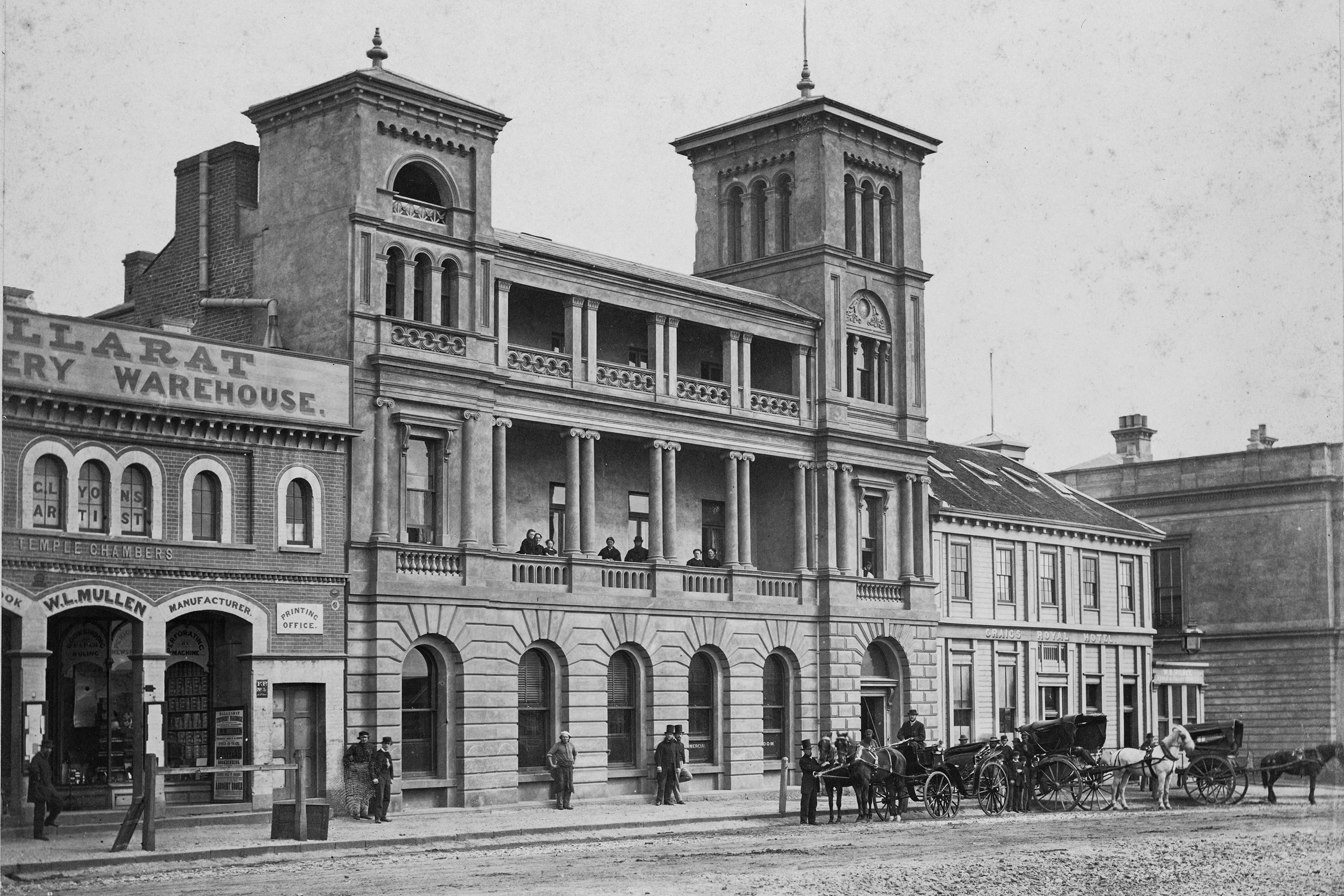
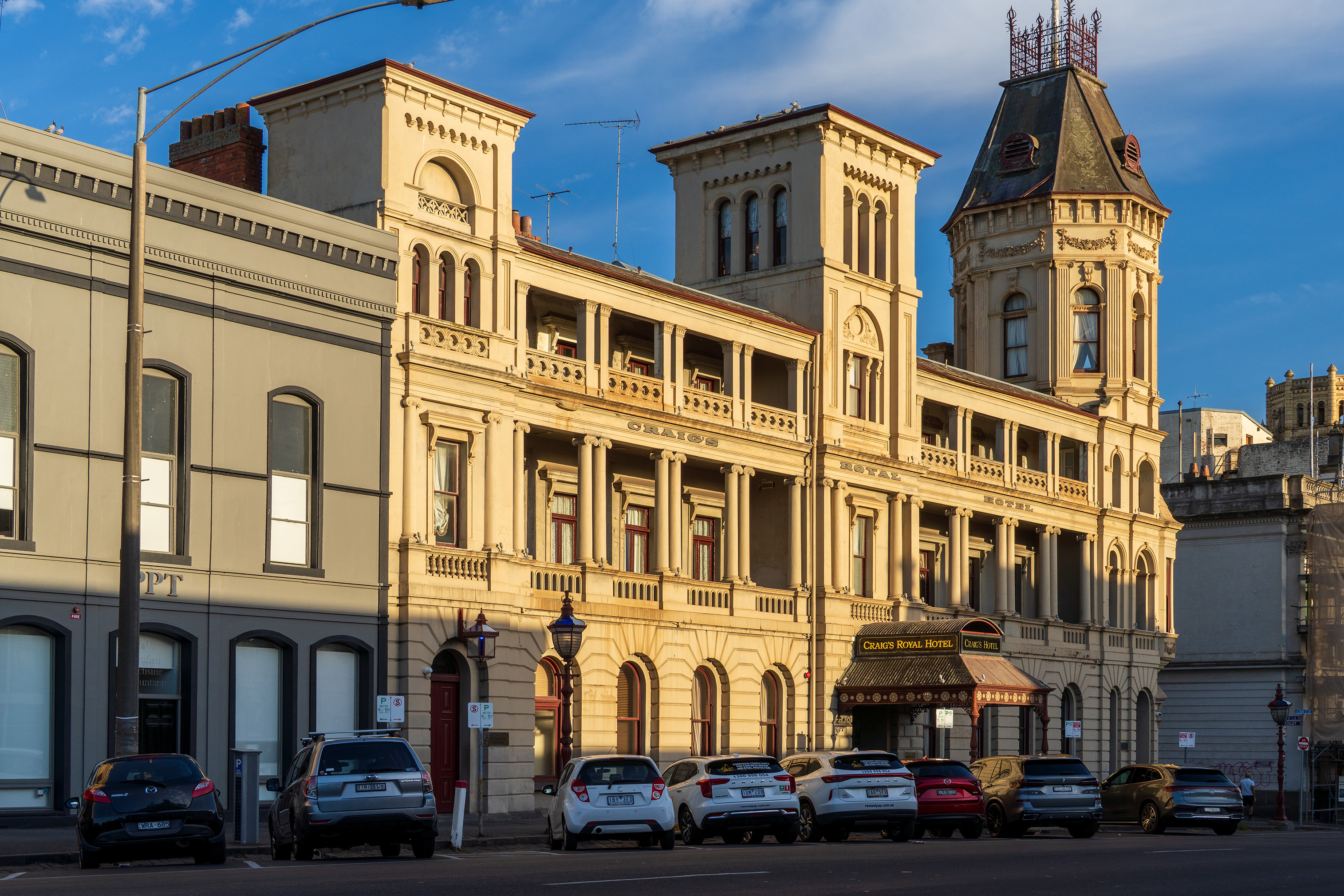
How the Lowly Lodge on Lydiard became a Lofty Lounge for Luminaries.
The site originally housed The Ballarat Hotel, opened in June 1853, shortly after the city boomed with gold rush traffic. It was quite possibly the first officially licensed hotel in the goldfields, serving miners and travellers. As Ballarat grew rapidly, such pubs weren’t just drinking venues – they were social hubs, meeting places, and sometimes the sites of important civic discussions. Hotels like this played a role in community organization during the tumultuous early years of the gold rush.
In 1857, Walter Craig bought the hotel, and it quickly expanded in size and prominence. By 1862, he had redeveloped the site into an impressive brick and stone building, better matched to Ballarat’s growing wealth.
The hotel gained the title “Royal” after Prince Alfred, Duke of Edinburgh stayed there during his visit in 1867. This was a major event: he was the first British royal family member to visit Ballarat, and the association elevated the hotel’s prestige.
It went on to host a number of celebrities, which cemented its reputation not just as a hotel but as a destination of cultural and social significance: Dame Nellie Melba, who reputedly sang from the balcony in 1908; American author Mark Twain, who called it the “pride of Ballarat;” Sir Robert Menzies, an Australian prime minister; and Sir Donald Bradman, the legendary cricketer.
Today, Craig’s continues to operate as a boutique heritage hotel with dozens of guest rooms, bars, restaurants, and event spaces, blending modern hospitality with 19th-century charm.
What You’re Seeing in This Photograph
-
The south wing – a three-storey Italianate building with ornate detailing – was designed by architect C.D. Cuthbert. It became a landmark on Lydiard Street.
-
This is an earlier incarnation of Craig’s, with two square towered pavilions and a central balcony – it predates the later north wing and octagonal tower added in 1889–90, which you don’t see here.
Why this photo matters?
- Craig’s stands as a key heritage landmark in Ballarat — embodying the city’s evolution from goldfield boomtown to modern regional centre. Its architecture, guest list, and continuous operation for over 160 years tie it to local identity and broader Victorian colonial history.
- Craig’s sat almost perfectly at the hinge point between arrival (the station) and authority (the civic precinct). If you were coming to Ballarat to do anything important, you passed Craig’s – and often stopped there.
- In the mid-19th century, hotels filled roles that later belonged to town halls, parliaments, and conference centres. At Craig’s, political meetings were held over meals and drinks, and court business spilled into private rooms.
- Being seen entering or exiting Craig’s – especially via the main entrance or balcony – was a public statement of social rank. In a gold-rush city where many people were newly wealthy and social order was still forming, this mattered enormously.
- Early Ballarat politics were rough, loud, and often radical (think Eureka Stockade). By the 1860s–70s, power had shifted from miners to professionals, tents to stone buildings, mass meetings to private rooms. Craig’s Royal Hotel both symbolised and facilitated this transition. Decisions that once happened in open-air meetings now happened upstairs, behind polished doors, among men in tailored coats. Craig’s was where the “tent democracy” of the goldfields became colonial governance of a city.
Explore Ballarat’s Full Visual History
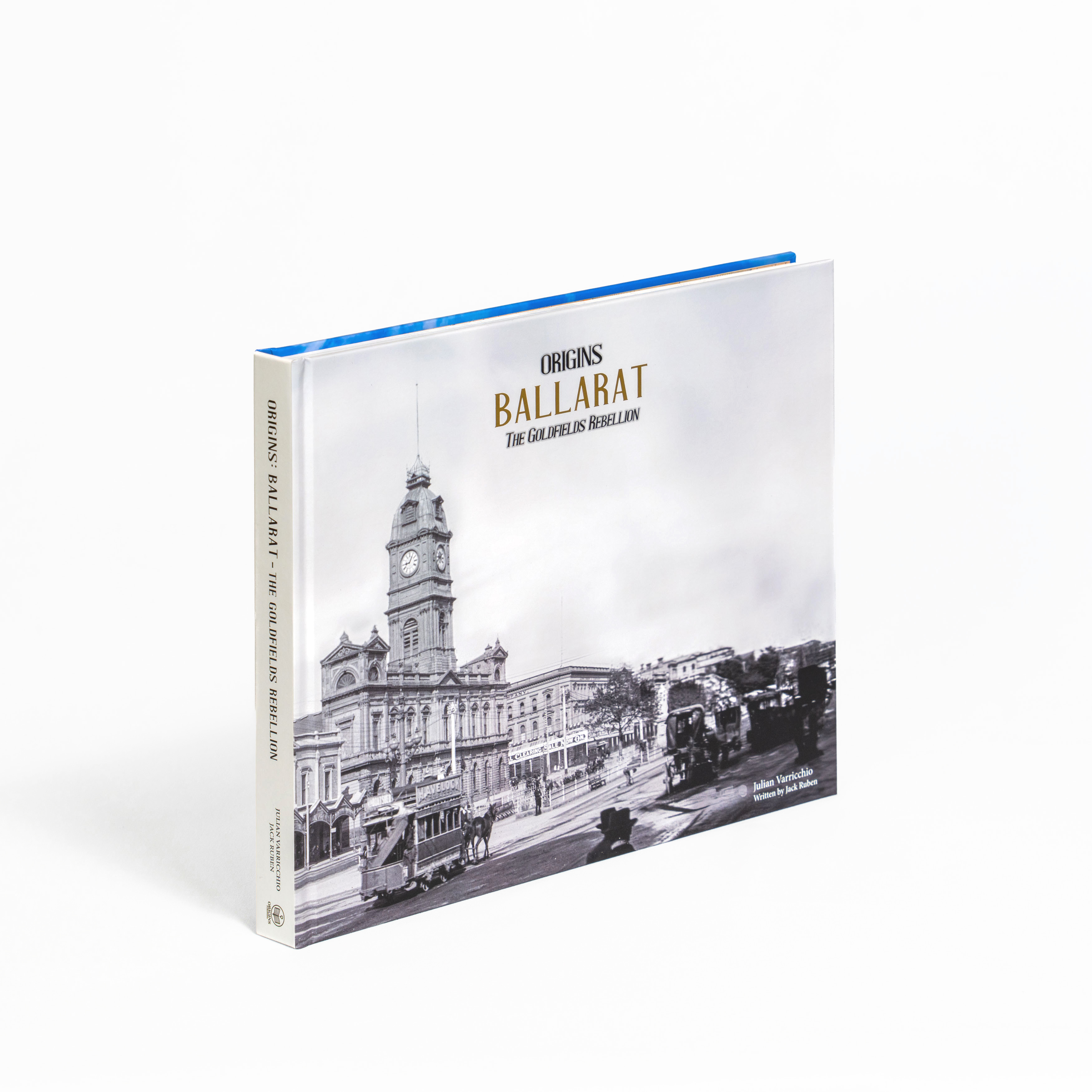
This photograph is just one of hundreds featured in Origins: Ballarat, a premium hardcover coffee table book that traces the history and stories from the Goldfields of Ballarat and beyond, from the 1800s to today. Historical images, modern re-shoots, and detailed narratives bring the regions past to life.
Want more like ths?
Head to our History Hub where we break down iconic images and add further context to the scenes and time once gone.